



Thread Rolling Before or After Heat Treatment: What the Go Gauge Shows on Fine-Thread Parts

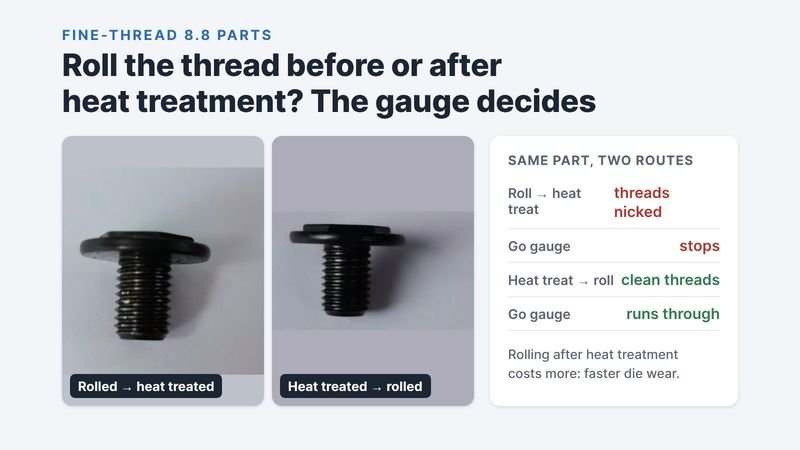
Short answer: On fine-thread parts that need heat treatment and must pass a go/no-go thread gauge, roll the thread after heat treatment, not before. Threads rolled first are easily nicked and distorted in the furnace and in handling, and then the go gauge will not run on. Rolling after heat treatment keeps the thread clean, but the hard material wears the rolling dies faster, so it costs more.
Two parts, two routes
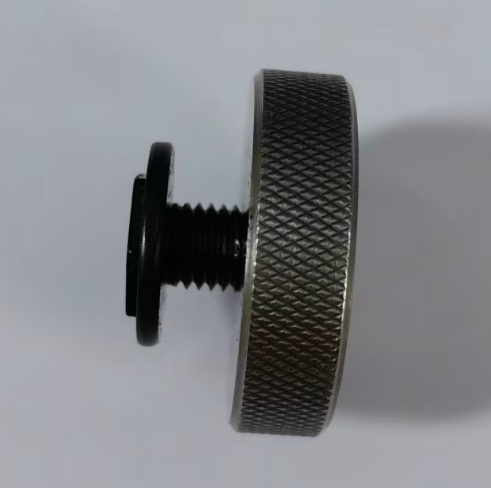
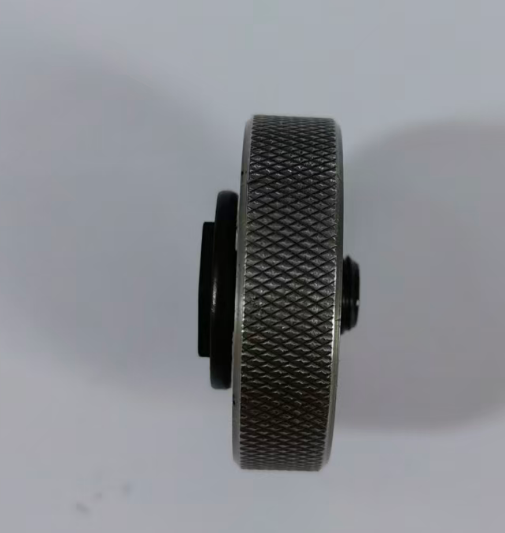
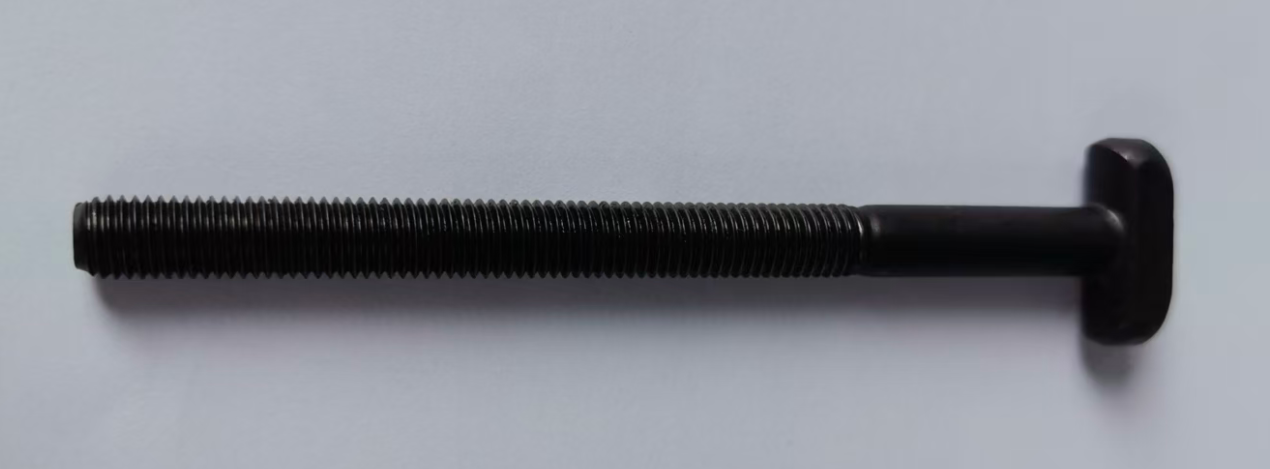
We documented this on two fine-thread parts in property class 8.8: a flanged screw with a 5/16-24 UNF thread, and a long T-head rod with a 1/4-28 UNF thread. Each was made both ways, and each was checked with the matching thread ring gauge.
- Rolled, then heat treated. The thread crests were nicked. The go gauge stopped after a few turns on the screw and halfway along the rod.
- Heat treated, then rolled. The threads were clean. The go gauge ran all the way on both parts.
Why the order matters
Fine threads have a small pitch and shallow flanks, so a small dent on a crest is enough to stop a gauge. When the thread is rolled first, it goes through the heat-treatment furnace and the handling around it as a finished thread. Parts knock against each other, and the heat can also move the thread slightly. When the thread is rolled last, the part is already hard, the thread is formed in the final step, and nothing after it can damage the form.
Published fatigue testing points the same way. An SAE paper (2005-01-1321) on high-strength fine-thread bolts found that threads rolled after heat treatment had clearly higher fatigue strength than threads rolled before. Our gauge photos show the fit side; the fatigue side comes from that research, not from our own tests.
Why it costs more, and when it is worth it
Rolling a hardened blank takes more force and wears the rolling dies much faster. That is the real cost difference between two quotes for the same fine-thread part. For a general-purpose screw that does not need a thread gauge check, rolling first may be fine. For high-strength parts under long-term load, or any part that must pass a go/no-go gauge, rolling after heat treatment is the safer route.
What to ask your supplier
- Is the thread rolled before or after heat treatment?
- Which gauge class is the thread checked to, for example 2A for UNF or 6g for metric?
- If two quotes differ a lot, ask both suppliers for their process route before comparing prices.
- If you are unsure, ask for samples from both routes and check them with your own gauge.
If you have fine-thread parts that need heat treatment, send the drawing, the property class and the gauge you check with through our RFQ form. We will state the process route in the quote.
Related: hydrogen embrittlement in plated high-strength bolts · cold heading vs CNC machining
How this was written: the photos and gauge results come from our own comparison of the two routes on two fine-thread class 8.8 parts (2026). The fatigue finding is from SAE technical paper 2005-01-1321, not from our tests. Part lengths are not given.