


Solid Rivets for Orbital Riveting: Why the Drawing Alone Is Not Enough to Quote

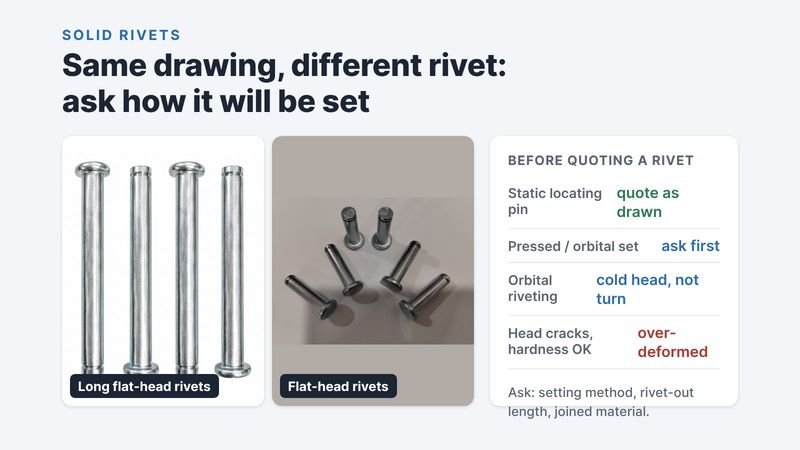
Short answer: A rivet drawing gives the dimensions, not how the rivet will be set. A static locating pin can be quoted as drawn. A rivet that will be pressed, orbital riveted or pushed into a panel has to deform without cracking, and that changes the material state, the blank design and the process. For orbital riveting, a cold-headed rivet is the better choice; a turned rivet is likely to crack when the tail is formed.
Hardness was in spec, the head still cracked
We have seen rivet heads crack after setting while the hardness was within the drawing. The hardness was not the problem. The deformation in the customer’s riveting step was larger than that material state could take. A hardness value on the drawing does not say how far the rivet will be formed, so it cannot prevent this on its own.
Why orbital riveting changes the process
Orbital riveting is cold forming: the tool rotates on the tail and spreads it into a head. The rivet has to take that second round of deformation. A cold-headed rivet keeps a continuous grain flow and is formed from wire that can be chosen and annealed for further forming. A turned rivet is cut from bar, so the grain is cut through, and even with annealing it is a weaker choice for forming. That is why our technical lead’s rule is to ask whether the rivet will be orbital riveted, and to cold head it if so.
What we ask before quoting a rivet
- Load type: tension, shear, torque, or alternating load?
- Setting method and deformation: pressed by hand or machine, clinched, orbital riveted? How much of the tail is formed?
- Joined material: steel, aluminium or plastic?
- Assembly equipment and cycle time: an automatic line needs far tighter size consistency than manual assembly.
- Consequence of failure: a rattle, or something that can hurt someone? This decides the inspection level.
- Environment: outdoor, vibration, temperature, corrosion?
With these answers, the same drawing can be quoted for what the part really has to do, not only for its dimensions.
If you have rivets to quote, send the drawing and tell us how they will be set through our RFQ form. If the setting method is not on the drawing, we will ask before we quote.
Related: what to specify for custom solid rivets · cold heading vs CNC machining
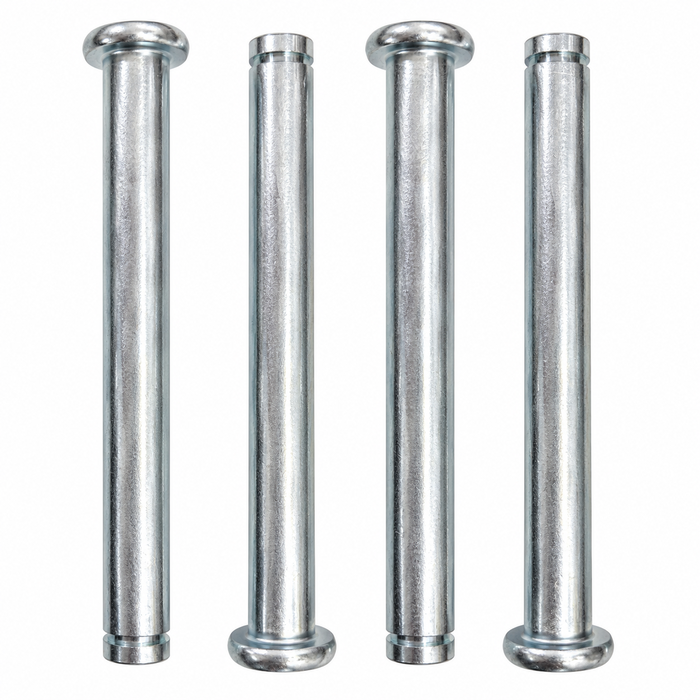
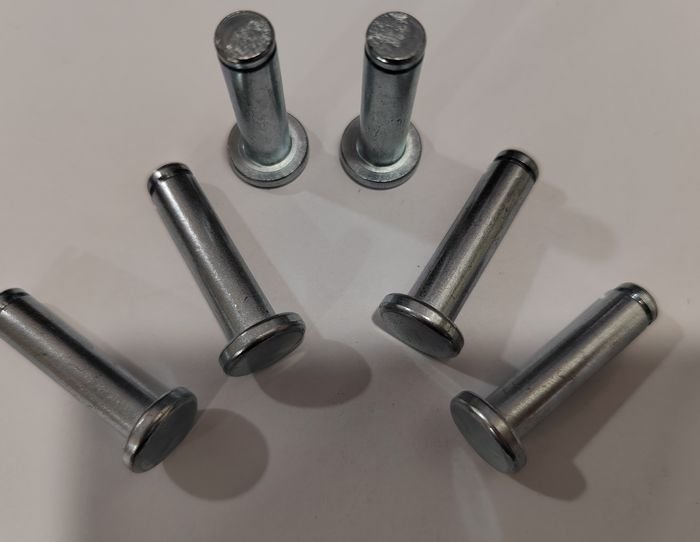
How this was written: the rules and the cracked-head lesson come from our internal product FAQ (2026), reviewed by our technical lead. No customer is named. The rivets in the photos are from our product records and are not the cracked parts.