



Cold Heading vs CNC Machining: When Should You Switch for Custom Fasteners?

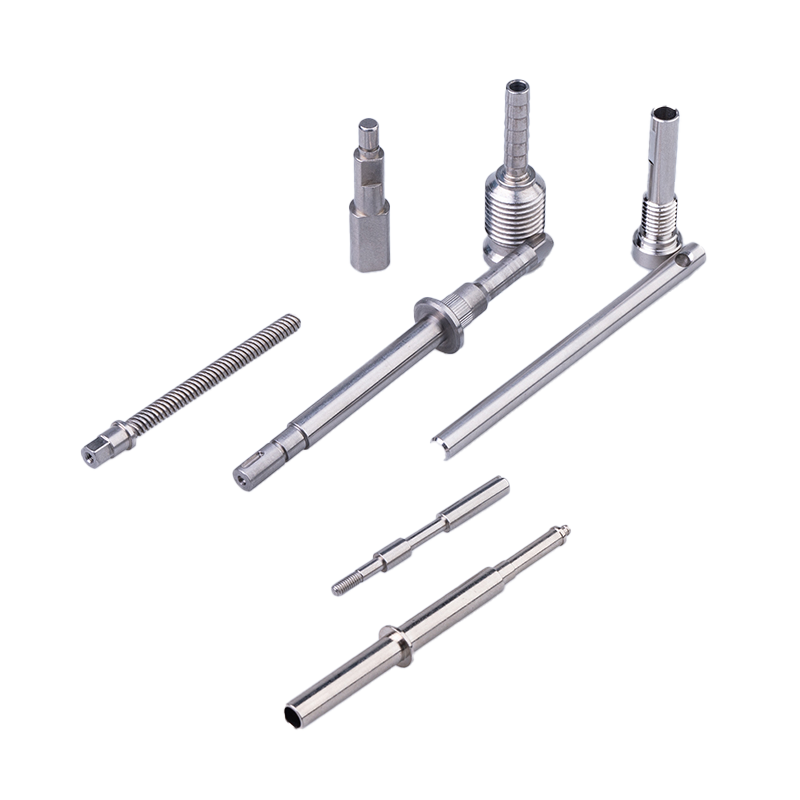
Cold heading can produce a lower unit cost than CNC machining, especially at higher volumes. But a lower piece price does not automatically mean a lower project cost.
For a custom fastener, the better question is not “How many pieces do I need before I should use cold heading?” It is: will the recurring cost saving recover the tooling investment, the batch minimum and the additional production commitment within the real life of this project?
We recently faced exactly this decision with a group of custom brass parts. Cold heading produced a lower quoted unit price for one part, but after comparing the actual saving with the tooling, the batch minimum and the expected demand, continuing with CNC machining still made more sense. That project illustrates why there is no universal production quantity at which CNC should automatically be replaced by cold heading.
There Is No Universal Volume Threshold
It is common to hear simplified rules such as “use CNC for low volume and cold heading for high volume.” The direction is generally useful, but it is not enough to make a purchasing decision.
A part at a hundred thousand pieces may already justify dedicated cold-heading tooling. Another part at half a million pieces may not. The result depends on several variables: whether the geometry is suitable for cold heading, the tooling investment, the unit-price difference, the batch minimum, the secondary operations, the expected repeat demand, and the stability of the design. This is why production volume should not be evaluated by itself.
First Check Whether the Part Is Suitable for Cold Heading
Cost calculations only matter after manufacturing feasibility has been confirmed. Cold heading forms material through dies under high pressure; CNC machining removes material to create the required geometry. A component that is easy to machine is therefore not automatically suitable for cold heading. Geometry, material, tolerances and secondary operations all affect the decision.
This became clear in our brass project. The customer had four custom parts in the same project, initially evaluated as machined parts. When future quantities increased, we reviewed whether cold heading could reduce production cost. However, we did not recommend changing all four parts to the same process. After reviewing their individual geometries and manufacturing requirements, only one part justified a detailed cold-heading evaluation.
The useful rule is: choose the manufacturing process by part, not simply by customer or project. Several components used in one assembly may legitimately use different manufacturing processes.
Calculate the Break-Even Quantity
Once a part is technically suitable for cold heading, the next step is to calculate whether the investment makes economic sense. A useful starting formula is:
Break-even quantity = tooling investment ÷ unit cost saving
To show the arithmetic with round numbers: if a machined part costs $0.42 and the cold-headed equivalent costs $0.36, the saving is $0.06 per piece. If the dedicated tooling costs $9,000, then $9,000 ÷ $0.06 = 150,000 pieces. In this simplified case, roughly a hundred and fifty thousand pieces are needed before the accumulated unit-cost saving recovers the initial tooling investment. (Illustrative figures for the method only — not quoted prices.)
This is not yet the final decision, but it gives the project a useful economic reference point.
A Real Project Where the Lower Unit Price Was Not Enough
In our brass fastener project, cold heading did produce a lower quoted unit price. The difference, however, was only about 3%. The cold-heading route also required dedicated tooling and a batch minimum in the six-figure range.
Based on the actual tooling investment and the unit-price saving, the break-even quantity worked out at approximately 275,000 pieces — around a third higher than the batch minimum we had been quoted. That created an important situation: at one production batch, the lower cold-heading piece price still would not fully recover the initial tooling investment.
So although the quotation showed cold heading unit price < CNC unit price, the project economics did not yet show cold heading total cost < CNC total cost. At the customer’s stage at that time, continuing with CNC machining remained the more practical option.
That 275,000-piece figure is not an industry threshold. It applies only to that project and its specific unit-price difference, tooling requirement and production conditions. Another part could reach break-even much earlier or much later. We reached a similar conclusion from the opposite direction when we explained why small-batch stainless male-female inserts are CNC-turned rather than cold-headed.
Batch Minimums Can Change the Economics Again
Even reaching the theoretical break-even quantity does not automatically make cold heading the better choice.
Suppose your real demand is 50,000 pieces a quarter, while the forming route carries a batch minimum several times that size. Producing the full batch at once may reduce manufacturing cost per piece, but it can also increase inventory, warehouse requirements, cash tied up in stock, obsolete-part risk, and exposure to future design changes.
Manufacturing cost may go down while the customer’s overall project risk goes up. This is why the batch minimum should be included in the process decision rather than treated as a separate purchasing issue.
Design Stability Matters
Dedicated tooling becomes much easier to justify when the design is already stable. If the customer invests in forming tooling and later changes an important feature, the existing tooling may require modification or replacement. Potential changes include head geometry, diameter, length, forming position, thread specification and locating features.
CNC machining normally offers more flexibility during the development stage, because many design changes can be handled through machining adjustments rather than new dedicated forming tools. So there is an important difference between high expected volume and high, repeatable volume for a stable design. Cold heading becomes much more attractive when both conditions exist.
Cold Heading vs CNC Machining: Do Not Compare Unit Price Alone
| Factor | CNC Machining | Cold Heading |
|---|---|---|
| Initial tooling investment | Lower | Higher |
| Unit cost at scale | Usually higher | Often lower |
| Design flexibility | Higher | Lower once tooling exists |
| Batch-size flexibility | Usually higher | Often lower |
| Production speed at scale | Lower | Higher |
| Best fit | Development, lower or uncertain volume | Stable, repeat high-volume production |
The correct comparison is not simply CNC price versus cold-heading price. It is the total project economics under the customer’s actual demand.
When CNC Machining May Still Be the Better Choice
CNC machining can remain the better option when demand is still uncertain, when the first order is relatively small, when the design is still changing, when the cold-heading unit-price advantage is small, when tooling payback would take too long, when the part still requires substantial secondary machining, or when a high batch minimum would create unnecessary inventory.
Using CNC during prototype, validation or early production is therefore not necessarily inefficient. In many projects it is a way to avoid investing in dedicated tooling before the design and the demand are proven.
When Cold Heading Starts to Make More Sense
Cold heading becomes more attractive when several conditions exist together: the geometry is suitable for forming, demand is consistently high, repeat orders are expected, the design is stable, tooling can be amortised over sufficient volume, the unit-cost saving is meaningful, and secondary operations remain manageable.
The key word is consistently. A forecast of a million pieces is not the same as a reliable repeat demand of a million pieces. Order frequency matters. For manufacturing decisions, these three situations are very different: fifty thousand pieces once; fifty thousand pieces every month; and a forecast of six hundred thousand pieces with no confirmed schedule.
Five Questions to Ask Before Switching From CNC to Cold Heading
Is the part technically suitable for cold heading?
Review geometry, material, tolerances and required secondary operations first.
What is the actual saving per part?
A 3% cost reduction and a 20% cost reduction create very different break-even quantities.
What tooling investment is required?
Include all dedicated forming and secondary-operation tooling, not only the header dies.
What is the break-even quantity?
Calculate tooling investment ÷ unit cost saving, and use the answer as a project-specific reference rather than a universal manufacturing rule.
Is the demand stable enough to reach that point?
Consider real order quantities, repeat frequency, batch minimums, product lifetime, and whether the design is already frozen.
Final Takeaway
Cold heading can significantly reduce the cost of high-volume custom fasteners, but production quantity alone should not determine the manufacturing process. A better decision sequence is: manufacturing feasibility → unit saving → tooling → break-even quantity → batch minimum → real demand → design stability.
In our brass component project, cold heading offered a lower unit price, but the saving was too small to justify the tooling and the batch commitment at that stage. Continuing with CNC machining was therefore not simply the “more expensive” process — for that specific project, it was the lower-risk economic decision.
If you are evaluating whether an existing CNC-machined fastener should be converted to cold heading, give your manufacturer the part drawing, the material, the expected annual volume, the typical order quantity, the expected repeat frequency, and any possible future design changes. The same inputs decide how quickly a quotation converges, which is why we set out what to pin down before the first sample is cut. Those inputs allow the manufacturing process to be evaluated against the actual project instead of a generic volume rule — send us your drawing and we will run the comparison for your part.
Frequently Asked Questions
At what quantity should I switch from CNC machining to cold heading?
There is no universal quantity. Calculate the tooling investment against the unit-cost saving, then consider the batch minimum, the actual repeat demand and the design stability. Two parts with the same annual volume can have very different break-even points.
Is cold heading always cheaper than CNC machining?
No. Cold heading often has a lower unit cost at high volume, but dedicated tooling and a large batch minimum increase the initial commitment. If volume is uncertain or the unit-price saving is small, CNC machining may still have a lower total project cost.
Can different parts in the same project use different manufacturing processes?
Yes. Process selection should normally be evaluated at the individual part level. Geometry, material, tolerances and volume may make cold heading suitable for one component while CNC machining remains more practical for another.
What information is needed to compare CNC machining and cold heading?
Provide the drawing, the material, the expected annual volume, the normal order quantity, the repeat frequency and any expected design changes. These factors allow the manufacturer to evaluate both technical feasibility and break-even economics.