



Large Brass Parts: When Cold Heading Does Not Pay

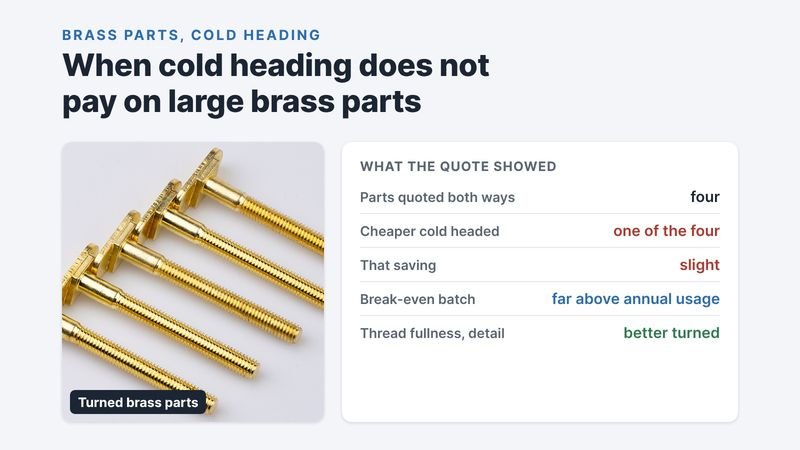
Short answer: Cold heading beats turning when the run is long enough to absorb the tooling and setup, and when the material is cheap enough that saving swarf matters. On large-diameter brass at annual volumes in the tens of thousands, neither condition holds well. We recently quoted four turned brass parts both ways. One of the four came out slightly cheaper cold headed; the other three did not, and stayed on the lathes.
Why the usual argument does not carry over to brass
The case for heading is made on three things: no swarf, a short cycle, and grain flow around the head. The first one is where brass breaks the pattern. Non-standard brass bar in a large diameter is an expensive, often long-lead material in its own right, and heading wire for the same part has to be drawn to size as well. The saving from not cutting chips is real but small against a material cost that stays roughly the same either way. Meanwhile the setup, the dies and the first-article work all have to be paid for out of the order in front of you.
Where the break-even actually sits
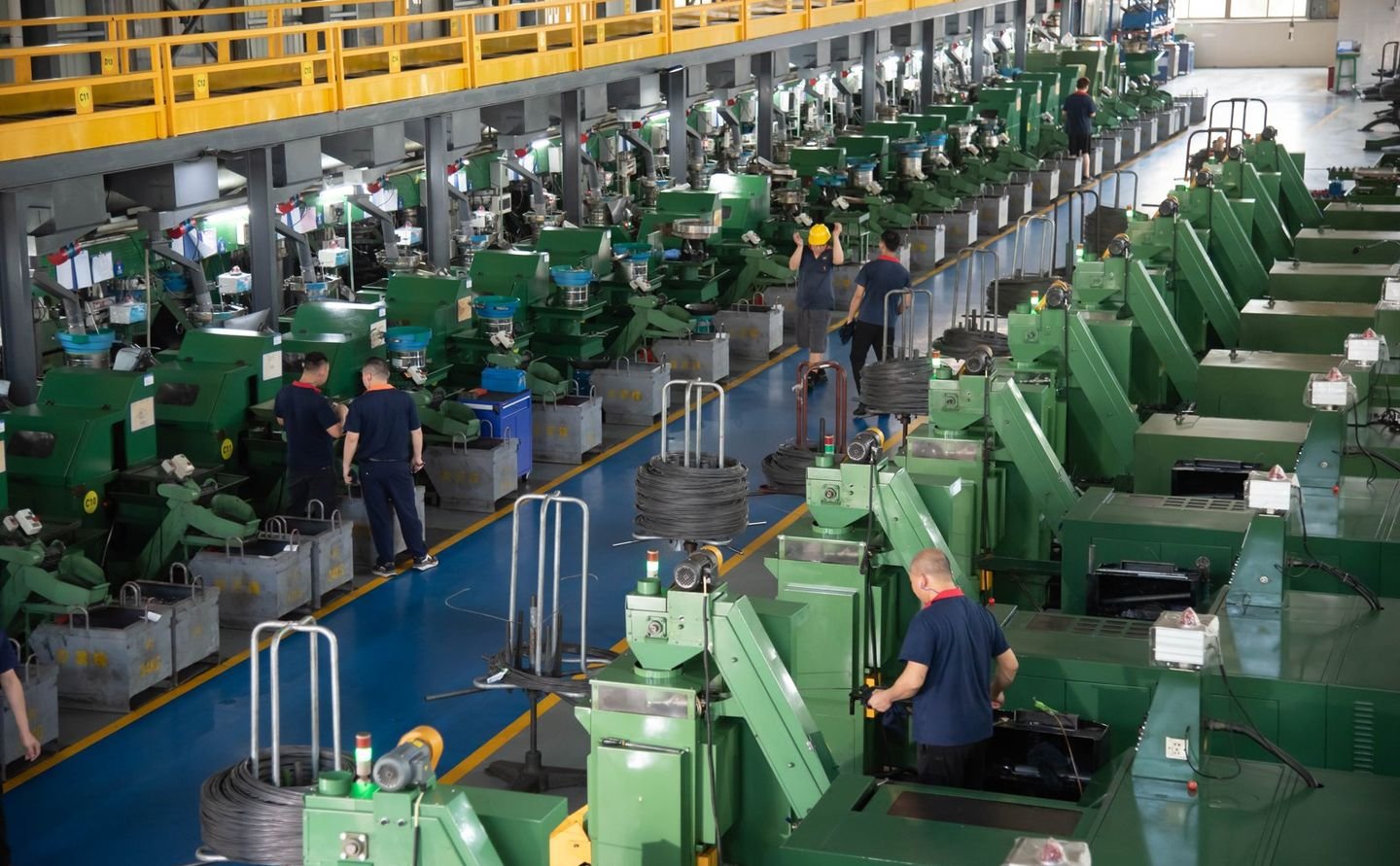
On the parts we costed, cold heading only began to make sense at batch sizes far above anything this part was ordered in. Below that point the per-piece share of tooling and setup eats the process saving, and at a few tens of thousands a year it eats it several times over. The break-even sits much lower on small-diameter steel, so this is not a statement about brass in general. If someone proposes heading to cut cost, ask for the batch size the saving assumes before you accept it — that one number decides the whole comparison.
What you give up besides the money
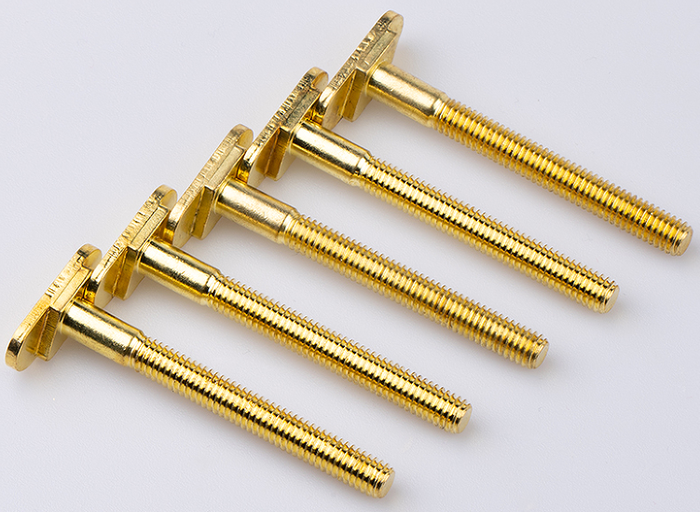
On these parts the turned thread was fuller and the small features were crisper than the headed and rolled version would have been. That is a real difference on a part where a mating component has to engage the full thread, and it is the reason the comparison is not only about price. Where the detail matters, turning holds it more reliably at this size; where it does not, and the volume is there, heading is the better process. Saying which case you are in is usually the fastest way to settle the process question, and it is a decision we would rather make before tooling than after.
How the buyer put it
The buyer on that enquiry had already reached the same conclusion from their own side, and said so plainly: cold heading was not their way, the price was really high, CNC was better. They were not arguing against the process in principle, they were reading the same arithmetic on parts of this size and volume. We quoted both ways anyway, because an assumption that holds for three parts out of four is still worth testing on the fourth — and on that fourth part, heading won.
What to send if you want the comparison for your own part
- The material and the largest diameter on the part, because that is what decides whether heading wire has to be drawn specially.
- Annual usage and the batch size you would actually order, not the annual figure split into an imaginary schedule.
- Which features have to be held: thread engagement, a sealing face, a small radius, a knurl.
- Whether tooling cost sits with you or is amortised into the piece price, since that moves the break-even point more than anything else on the list.
We have written about the general version of this choice in cold heading vs CNC machining, and about what heading itself can and cannot form in one blow in upset ratio, cut-off and cold shuts. This post is the narrower case: large brass, moderate volume, a real quote that went both ways.
To have your own part costed both ways, send the drawing or a sample photo through our RFQ form and tell us the batch size you want the comparison based on.
How this was written: the costing comparison and the buyer’s own summary come from our record of that enquiry, held in the evidence pool as approved, anonymous items. The customer, the industry and the application are not named, and no drawing dimension or unit price is published. The parts shown are other brass work of ours.