



Insert Nuts for Wood Bed Frames: Choose the Material and the Pilot Hole Together


Short answer: For an insert nut driven into solid wood, the material and the pilot hole have to be chosen together. In the case below, zinc alloy inserts cracked at the flange in a tight hole and kept cracking after the hole was opened up, because the material had reached its limit. Steel in a hole sized by the customer’s own trial solved it. Confirm both with a trial in the wood the furniture is actually made from.
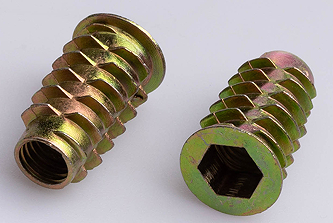
The case: inserts for a solid-wood bed frame
A furniture maker came to us for M8 flanged insert nuts with a hex socket, to assemble wooden bed frames. They asked for a larger outer thread so the insert would hold harder in the wood. Before quoting, we asked where the inserts would go. The frames were solid wood, so of the two materials we offered, steel and zinc alloy, we recommended steel.
The first steel inserts tried on the frames did not drive smoothly, and the customer felt the outer thread was not holding well. We suggested zinc alloy instead and sent samples. The zinc alloy inserts went in, but the customer reported that the flanges were cracking.
Why the flange cracked
We asked for the pilot hole size. The frames were drilled at 9.5 to 10 mm. For this insert we usually recommend 11 mm. In a hole that small, the insert meets a lot of resistance as it is driven, and the load goes into the flange.
The customer tried 11 mm. Cracking dropped but did not stop. At that point the material was the limit: zinc alloy is softer than steel, and in solid wood it had less margin for driving force than steel. We recommended going back to steel, with a pilot hole of about 10 mm.
The customer then tested steel inserts in their own frames and found that a 9.7 mm hole gave the best result.
The result

The first order was zinc alloy inserts, M8 × 25. The repeat order the following year was steel inserts, M8 × 17, at twenty times the quantity of the first. The hole size that made it work came from the customer’s own test, after the two of us had worked out which variable to change.
The figures above apply to this insert in this customer’s wood. A different wood species, density or moisture content will move the best hole size, which is why we ask for a trial rather than quote one number.
Steel or zinc alloy for wood inserts
- Zinc alloy is softer than steel. In this case it cracked at the flange in solid wood, and opening the hole up reduced the cracking without stopping it.
- Steel takes more driving force before the flange fails. In solid-wood frames it is the safer starting point, as long as the hole is sized by trial.
- When inserts crack, check the pilot hole first. If the cracking continues once the hole is right, change the material.
What to send with an insert nut RFQ
- Thread size and length, flanged or straight, and the drive (hex socket or slot).
- Where the insert goes: solid wood, plywood or particleboard, and the wood species if you know it.
- The pilot hole diameter and depth you drill now, and how the inserts are driven (by hand or by machine).
- The finish you need. Both orders in this case were colour zinc.
With those four answers we can suggest a material and a starting hole size, and send samples for a trial in your own wood. Send them through our RFQ form, or see our zinc alloy insert nuts.
Related: stainless steel insert nuts turned on CNC · what to specify for furniture connecting bolts
How this was written: the case comes from our customer records and order history (2022–2023). The hole sizes are the values tried in this customer’s frames, not a general standard. The customer is not named.