


Custom Self-Tapping Screws: Thread Type, Drive, and How to Specify Them for an RFQ

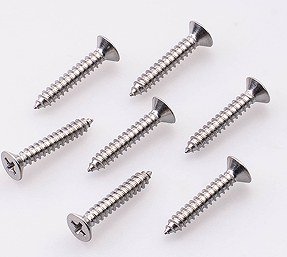
An enquiry landed with a single line of specification: self-tapping screw, M4 × 6 mm. Nothing about the thread form, nothing about what the screw had to bite into. We quoted a thread-forming part; the buyer came back saying it had to cut into metal. We requoted; the buyer then added that the head needed a combination slot-and-cross recess. Three passes to price one short screw. That is what happens when a self-tapping screw is described the way a machine screw is, by diameter and length. This screw forms or cuts its own thread as it drives, so there is no tapped hole and no nut: the screw is the whole joint. The specification has to be read backwards, starting from the part being fastened.
Start at the far end: what the screw has to bite into
The first line of a self-tapping enquiry should not be the screw at all. It should be the mating material and its thickness — plastic, thin sheet, thicker stock, hard metal — and whether a hole is pre-drilled. Everything downstream is a consequence of that answer. A buyer who states the joint material can leave the rest to us and still get a firm price; a buyer who states only size and length is describing a part that could be built several different ways.
It is also the most common root cause behind rejects on the customer’s assembly line. A thread-forming profile that works in plastic or thin sheet will strip or refuse to start in hard metal; a cutting profile meant for metal splits soft material. The screw is not wrong in either case — it is being asked to work in a material nobody wrote down.
The material picks the thread form, and the point with it
Once the joint material is on the table, the thread form is close to determined. Forming threads displace material and rely on it flowing around the crest; cutting threads remove material and rely on the chip having somewhere to go. Trilobular profiles sit in between — a Ukrainian buyer came to us for self-tapping bolts with exactly that thread, made to roll into metal rather than cut it, which is the right call when there is enough material to displace.
The point belongs to the same decision, not to a later one. A gimlet point starts in thin sheet without a pilot; a blunt or cutting point suits pre-drilled or thicker stock. Choose the point independently of the thread and the screw either wanders on entry or demands a pilot hole the design never allowed for.
| What you drive into | Thread form | Point |
| Plastic, soft or thin sheet | Thread-forming, displacing material | Gimlet, starts without a pilot |
| Harder metal, thicker stock | Thread-cutting, or trilobular forming | Blunt or cutting, usually pre-drilled |
| Not stated in the enquiry | Cannot be fixed — expect a requote | Cannot be fixed |
Thread form sets the drive torque, and torque sets the recess
A cutting thread in metal needs far more torque than a forming thread in plastic, and that torque lands entirely on the recess. This is why the drive is not a styling choice made after the thread. A Chinese buyer ordered countersunk square-drive self-tapping screws at #8 × 3-1/2″, long and slender, where the square drive exists to put torque down the shank without camming out. An Italian buyer needed a pan-head combination drive, slot and cross together, at M4 × 6 mm — short enough that head and recess govern the part more than the thread does. A Thai buyer specified socket cap at M4 × 12 mm with a hex socket across flats of 3.1 mm, where the internal drive dimension is the functional feature. A US buyer wanted socket cap at M3 × 50 mm, a fine diameter run to an unusual length, where recess variation shows up as cam-out long before the thread complains.
Recess geometry that drifts across a lot is the fault most often blamed on the driver rather than the screw. We read head, recess, and length on an optical profile projector (0–300 mm, ±0.0005 precision), and full lots pass an automatic optical sorter measuring outer diameter and length on every piece to within 0.01 mm. The same head-and-drive discipline shows up in pan-head Phillips screws and furniture connecting bolts and cam locks.
Hardness is a consequence, not a preference
A self-tapping screw has to be harder than the material it drives into and no harder than it needs to be, because the same drive torque that cuts the thread will snap a brittle screw. Case-hardening that is too shallow strips the leading threads; too deep and the screw breaks in the recess. There is no universally correct hardness — it is read off the joint material, which is why it comes late in this sequence and not first. We check surface and core on a hardness tester covering HV100–800 Vickers and HRC20–70 Rockwell.
Finish is the last decision and the easiest to state: case-hardened carbon steel for most joints, stainless where corrosion matters, plus the plating if any. Where the screw is plated, coating is verified for corrosion resistance by salt-spray test before shipment.
Making it: which line the part goes down
Bodies and heads are cold-headed from wire at diameters of 2.0–16.0 mm and lengths of 4.0–1000 mm, which covers every part named above — the M3 and M4 shanks, the #8 body, the long 50 mm and 3-1/2″ lengths alike. Small batches and unusual points that do not justify a die are turned on our turn-mill equipment (φ2–200 mm) instead. Thread and point are then rolled or formed to the profile the joint calls for.
Giving us enough to price it in one pass
Working the decision path in order, an enquiry that needs no follow-up carries:
- The material you drive into, and its thickness — plus whether the hole is pre-drilled.
- Nominal size and length with tolerances, metric or imperial.
- Head style and drive — countersunk, pan, or socket cap; square, hex socket with the across-flats stated, Phillips, slot, or a combination.
- Thread profile if you have a preference — trilobular forming for metal, or a cutting thread; otherwise describe the joint and let us recommend.
- Material and finish, including plating.
If no drawing exists, send the screw or the parts it has to join. We reverse the specification and return it for approval before quoting — the same route we use for custom fasteners made to your drawing. The rest of the family sits in our screws category. Either way you get back a written specification you can hold every future shipment against, which is cheaper than a third requote.