


Connector and Straight Pins: What to Specify in Your RFQ

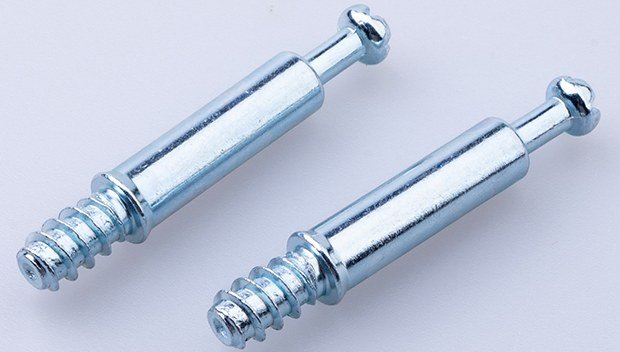
Connector pins, straight pins, and dowel-style pins look like the least demanding parts in a bill of materials. In practice they generate a steady stream of requotes and sample rejections — not because they are hard to make, but because they are easy to under-specify. A pin that is a few hundredths oversize binds in its bore; one with a burred groove or a bent shank jams an automated line. This is a walkthrough of what a factory actually needs to quote a precision pin correctly the first time, built around real inquiries we have handled.
Three real inquiries from this family
These arrived from three different markets, and each one turns on a dimension a casual RFQ leaves out:
- A US buyer asked for a connector pin at φ0.19″ × 0.264″ (about 4.8 × 6.7 mm) and wanted sample pieces before committing — a small envelope where a few hundredths of a millimetre decides whether it seats.
- A Canadian buyer needed stainless straight pins at 3.175 × 50.8 mm (1/8″ × 2″) — a long, slender part where straightness matters as much as diameter.
- A Turkish buyer ordered a twin-groove pin at φ6.9 × 43.4 mm on a recurring basis — here the groove geometry, not the plain diameter, is the functional feature.
Why pins reject at the customer’s line
The complaints we hear about pins from a previous supplier fall into a short list, and every item on it is preventable:
- Diameter drift. An oversize pin binds in its bore; an undersize one is loose and works free. On a small connector pin the whole tolerance band can be a few hundredths of a millimetre.
- Bend and lack of straightness. The longer and thinner the pin, the more this dominates — a 50 mm stainless pin that is slightly bowed will not feed cleanly.
- Burrs and inconsistent grooves. A groove that varies in width or depth, or carries a burr, stalls assembly and can score the mating part.
How we make and verify precision pins
Which process fits depends on the pin’s size, length, and features, so we match the part to the equipment rather than force every pin down one route:
- Forming. Short pins in common diameters are cold-headed (wire φ2.0–16 mm). Longer or more slender pins, and small batches where a die is not justified, are turned — our Swiss-type lathes handle diameters up to φ25 mm at lengths that cover long straight pins, and our turn-mill equipment covers φ2–200 mm. That is what lets a 50 mm stainless straight pin be made straight instead of straightened after the fact.
- Diameter and length. Verified on an optical profile projector (0–300 mm range, ±0.0005 precision) and, for full-lot control, an automatic optical sorting machine that reads outer diameter and length to within 0.01 mm on every piece.
- Straightness and end faces. Bend, runout, and end-face flatness are read directly on a concentricity tester covering φ3–25 mm workpieces.
- Surface and grooves. Where a smooth shank or a controlled groove matters, surface finish is measured on a roughness tester, and thread or groove form is confirmed against the print.
What your RFQ should include
If you buy connector, straight, or grooved pins — or are moving an existing part to a new supplier — these are the lines that let a factory quote accurately without a second round of questions:
- Diameter and length, with tolerances. The tolerance band matters more than the nominal size; state it, or state the fit the pin has to achieve.
- Straightness or runout, if the pin is long or slender.
- Any groove, chamfer, or end feature — position, width, depth, and tolerance. On a grooved pin this is the functional dimension, not a detail.
- Material and finish — for example stainless for corrosion resistance, plus any plating and its corrosion requirement.
- A drawing, or a sample. If no drawing exists, send the part: we reverse the specification and return it for your approval before quoting.
Where this sits in our range
Precision pins are a core part of what we turn and inspect. The same discipline shows up across the family: the surface-finish side is covered in our piece on precision hinge pins, the forming-and-burr side in stroller wheel axle pins, and the offset-geometry case in eccentric locking pins.
Send your pin drawing for a quotation, or a sample if the drawing never existed — either way you will get back a specification you can hold every future shipment against.