


Plastic-Covered Connecting Bolts: Where Defects Are Stopped Between Processes

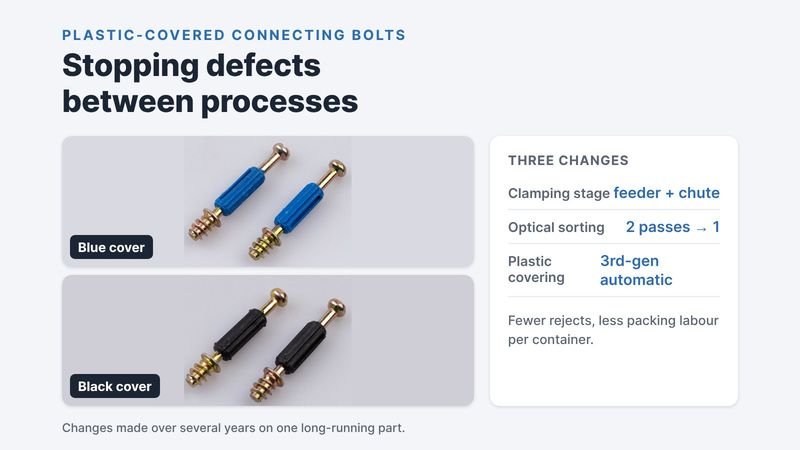
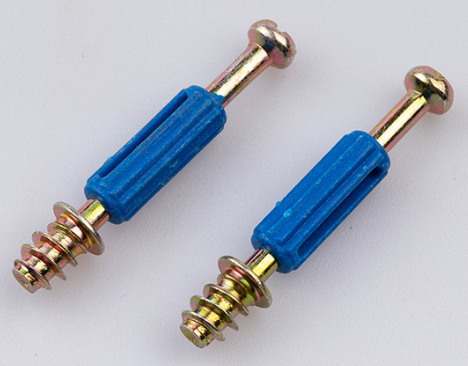
Short answer: A plastic-covered connecting bolt goes through heading, a second forming stage, thread rolling, plating, plastic covering, optical sorting and packing. A defect made at the start and caught at the end has already taken up every step in between. On one long-running bolt, the largest gains came from stopping defects at the stage where they start. Once that held, two optical sorting passes could become one.
Why a late catch costs more
A connecting bolt with a bad head or a damaged thread from forming still gets rolled, plated and covered before anyone sees it, if the only check is at the end. Each of those steps costs time and material. Sorting at the end also has to catch defects from every stage at once.
What changed, stage by stage
- At the second forming stage, we added a dedicated vibratory feeder and a discharge chute, so parts with defects from heading do not flow into the later stages.
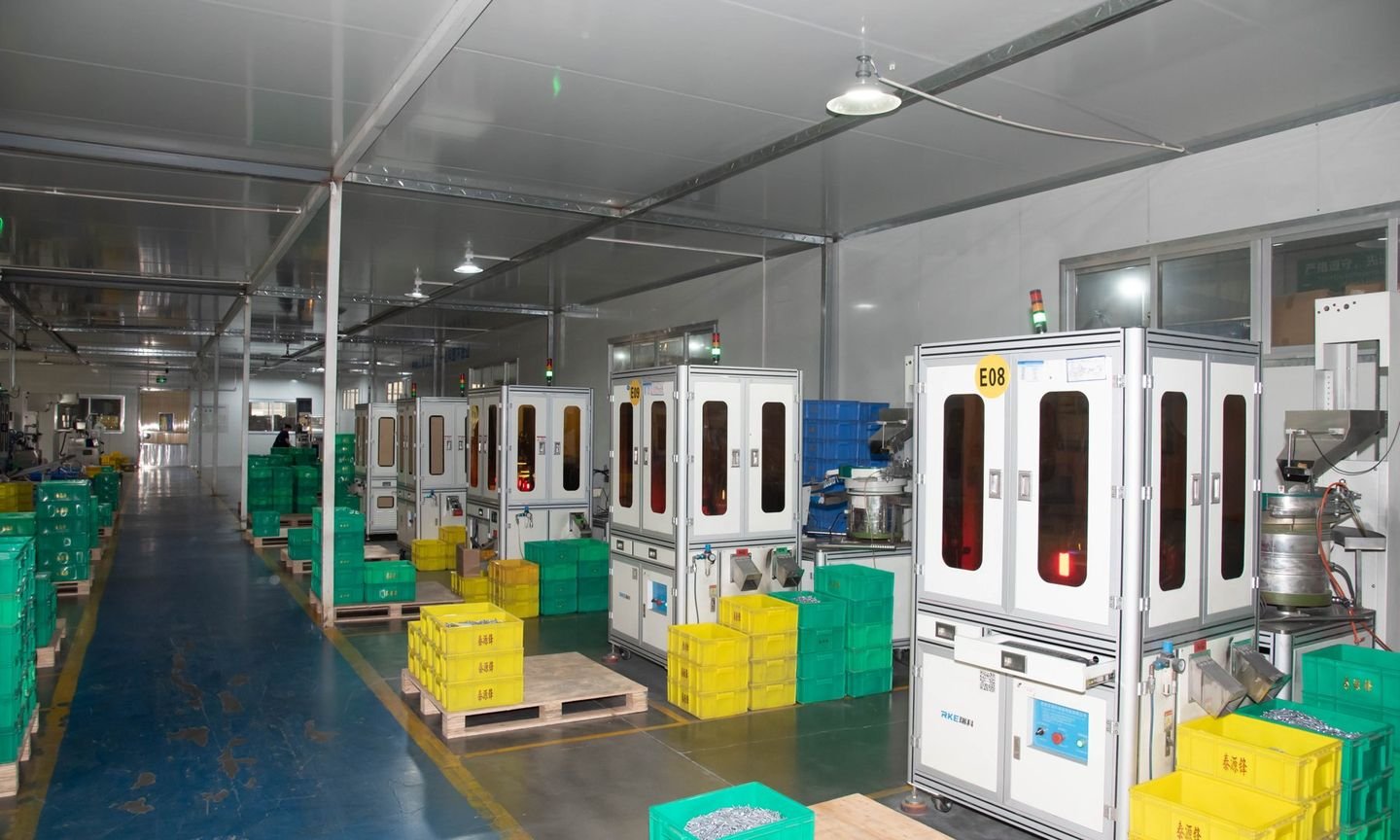
- Optical sorting used to run twice: after plating and again after plastic covering. Once the earlier stages were stable and the covering machines were improved, the two passes became one final pass.
- Plastic covering moved from first-generation machines that needed several operators to third-generation automatic machines.
The result
Finished-part defects went down. The packing labour needed to fill one container dropped a lot, because fewer parts had to be handled and re-sorted. None of this came from one change: each step only worked once the step before it was stable.
What to ask a supplier of plastic-covered bolts
- Where is the first check after heading, and what does it stop?
- How many optical sorting passes are there, and at which stages?
- Which steps are done in-house and which by partners, such as plating?
- How the parts are packed for your assembly line.
If you buy plastic-covered connecting bolts, send your drawing or sample through our RFQ form. We will tell you how we would run it and where the checks sit.
Related: what to specify for furniture connecting bolts · upset ratio, cut-off and cold shuts in cold heading
How this was written: the changes come from our own production records for one long-running part. Plating is done by a plating partner. No customer is named.