


Custom Threaded Rods: Four Parts, One Mould Fee, and How the Samples Were Split

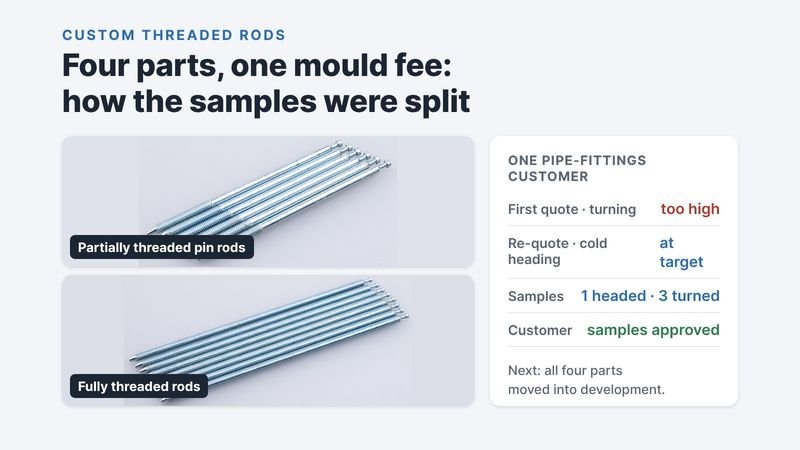
Short answer: When a turned quote for custom threaded rods comes in too high, check whether the parts can be cold-headed. Cold heading needs its own die for each part, so if the buyer will pay for only one die, cold-head that sample and turn the rest. That is how we handled four rods for a pipe-fittings maker. The samples were approved, and all four parts moved into development.
The case: four rods made to drawing
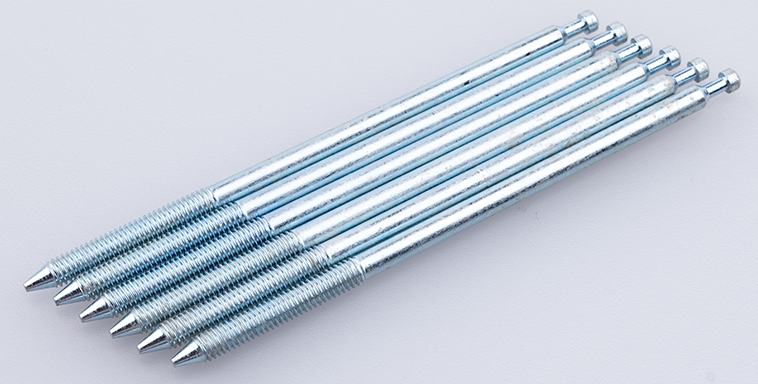
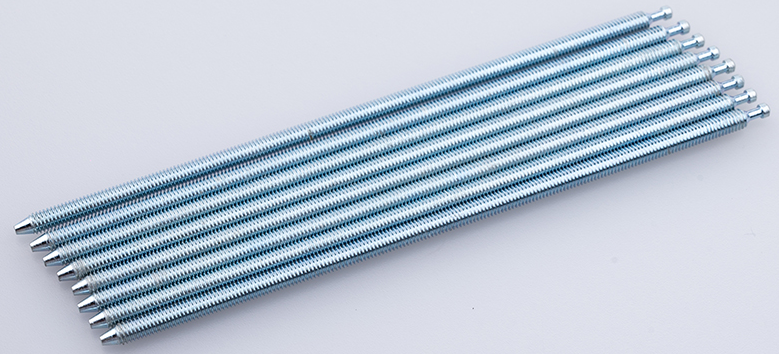
A pipe-fittings maker sent drawings for four parts: two partially threaded pin rods and two fully threaded rods. Each was needed at around 100,000 pieces, in steel, with no plating and only anti-rust oil. Our first quote was based on turning.
The customer said the price was too high and sent a target price.
Why the first quote was high
Turning cuts each rod from bar stock, one piece at a time. It is the right process for samples and small runs, but at 100,000 pieces per part the machine time adds up. Cold heading forms the part from wire in a die, much faster, so the unit price drops once the volume is there. The cost is the die: each part needs its own tooling, paid once at the start.
So we told the customer we would check whether these rods could be cold-headed. They could, and we re-quoted at the customer’s target price. The target was tight for us, but we wanted a long-term cooperation and said so.
Four parts, one mould fee
Then came the samples. The customer wanted samples of the quoted parts but would pay the mould fee for only one. So we split them: one part was cold-headed on its new die, and the other three were turned. The turned samples have the same material and shape, so the customer could check all four in the assembly without paying for four dies before knowing the parts worked.
The customer paid the one mould fee, received the samples, and confirmed they were OK.
What happened next
After the samples were approved, the customer moved all four parts into development, this time with tooling for each part. The tooling charge is refundable once orders reach an agreed volume. During development, one part, the longest fully threaded rod, proved not suitable for cold heading and stays on turning. Not every rod can be cold-headed: very long, slender parts are harder to feed and form in a die, so this has to be checked part by part.
If you are sourcing custom threaded rods
- Ask which process the price is based on: turning or cold heading.
- At high volume, ask for a cold-heading quote and the tooling cost for each part.
- If you cannot pay for every die before testing, ask for turned samples of the other parts. They work for fit checks. For load-bearing parts, do the final strength check on cold-headed parts, because turning cuts the grain flow that cold heading keeps.
- Ask the supplier which parts may not suit cold heading, and plan those on turning.
- For parts with no plating, write “No plating (oiled)” on the drawing or order, so nobody reads the finish as missing.
If you have custom rods or pins to quote, send the drawings and annual quantities through our RFQ form. We will tell you which parts can be cold-headed and quote both ways where it makes sense.
Related: cold heading vs CNC machining for custom fasteners · trade-show samples turned first, die made in parallel
How this was written: the case comes from our sales records and new-product development records (2025). The customer is not named, and the sizes on the customer’s drawings are not given.