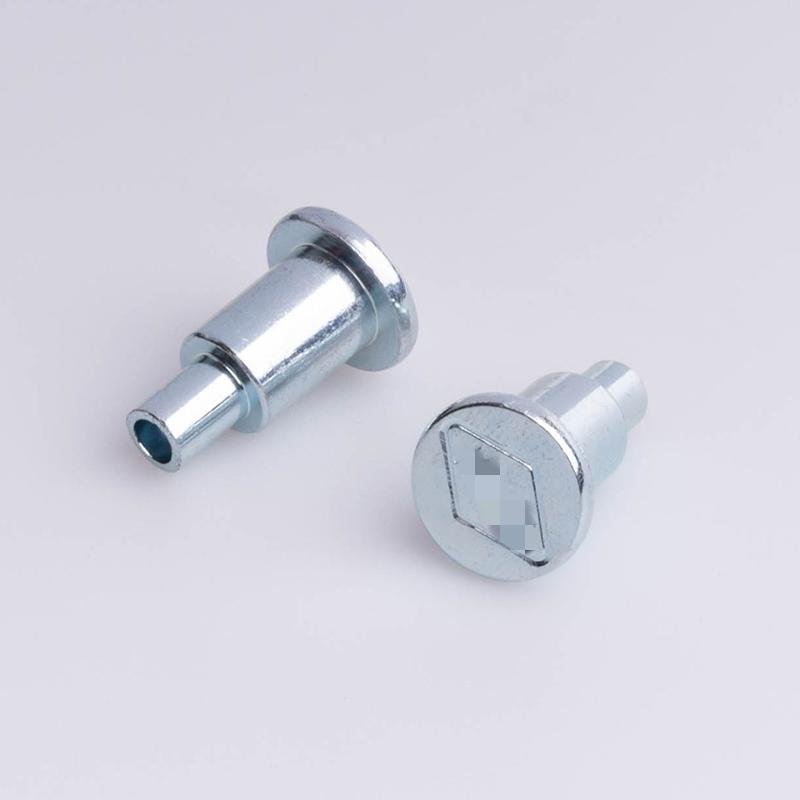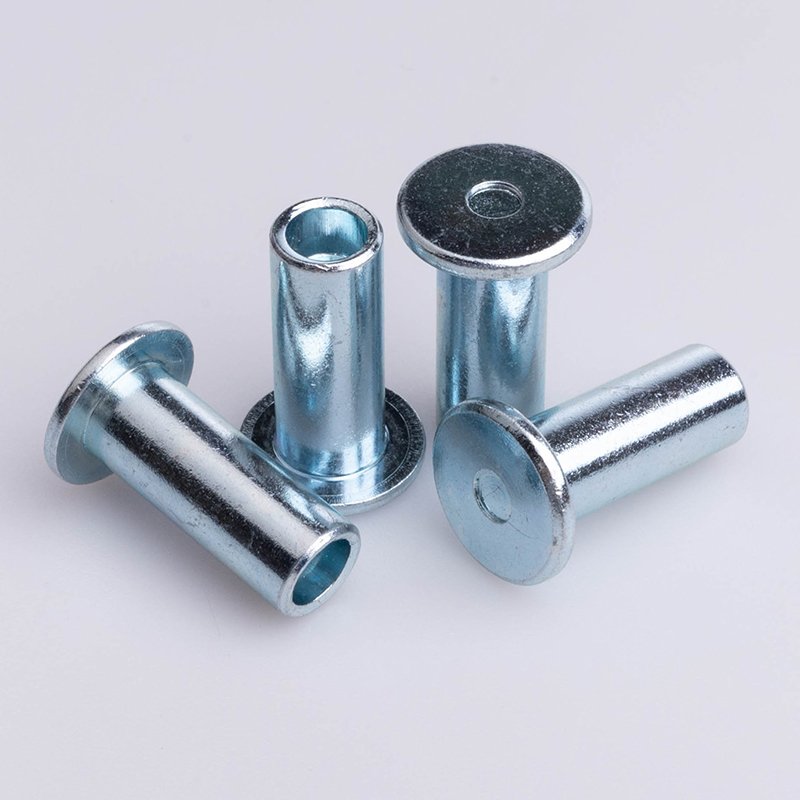

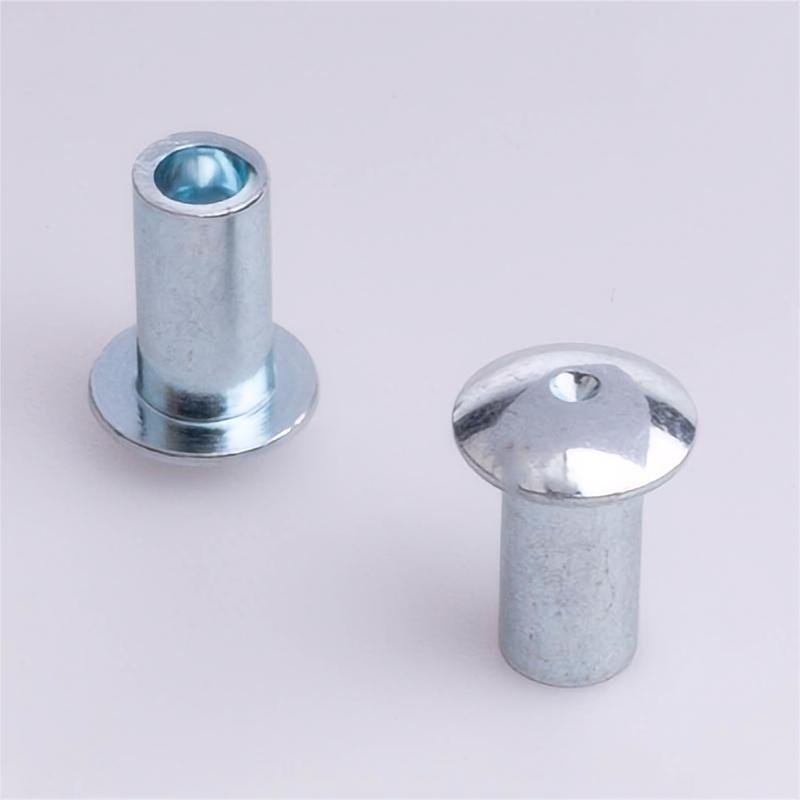
Custom Semi Tubular Rivet

Rivets create permanent or semi-permanent joints where compact assembly, pivoting, or material retention is required.

E-mail

info@tfscrew.com

WhatsApp

+86 137 2823 7231

Phone

+86-769-22239617

Request a Quote Now

For technical consultations, solutions, and other inquiries regarding our products, please fill out the form below and click the “Submit” button. We will contact you as soon as possible.

Drag & Drop Files, Choose Files to Upload

How It Works

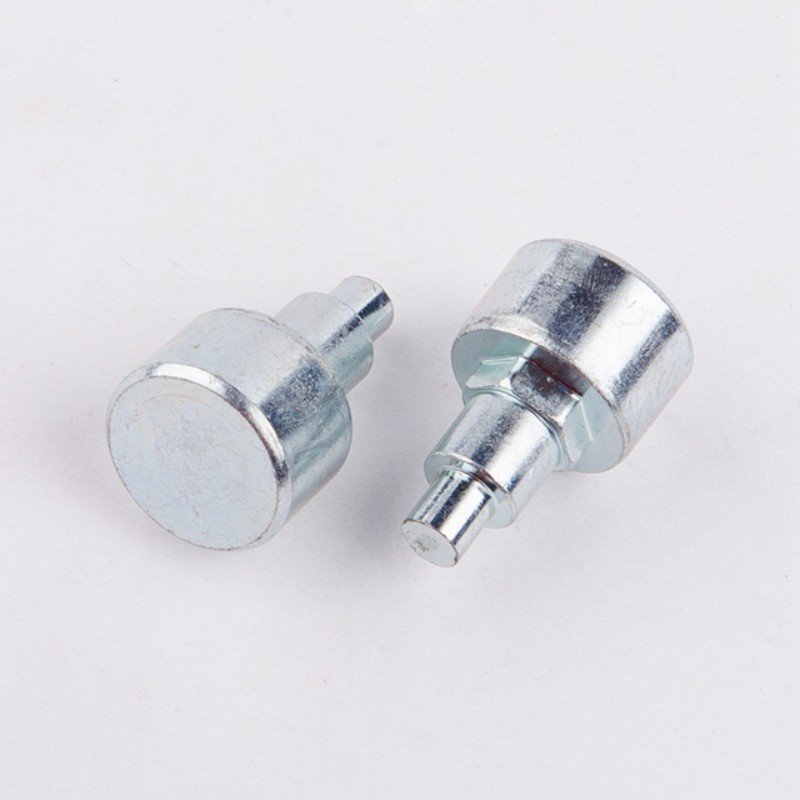
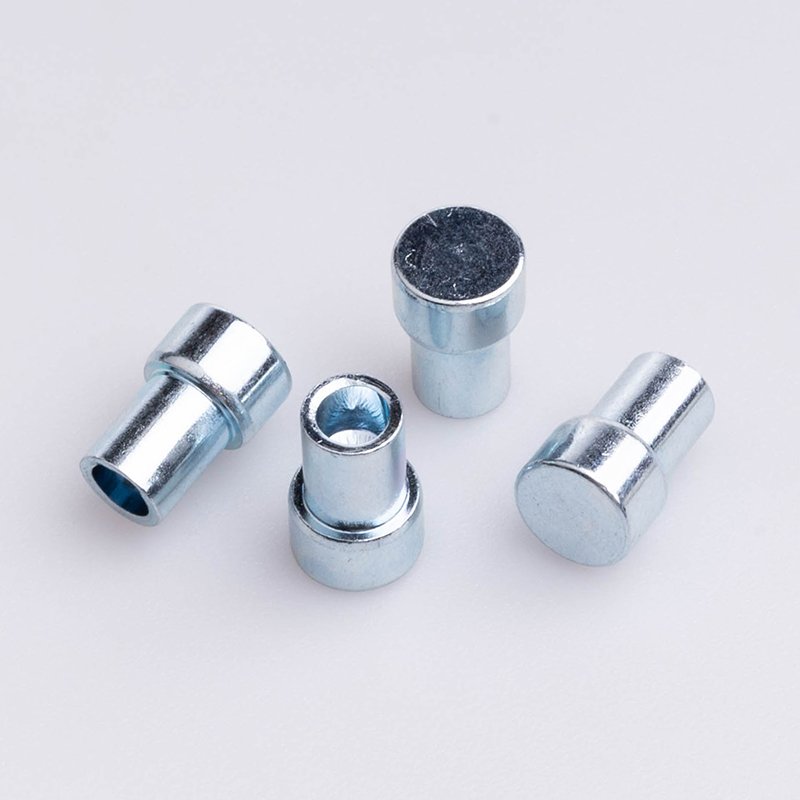
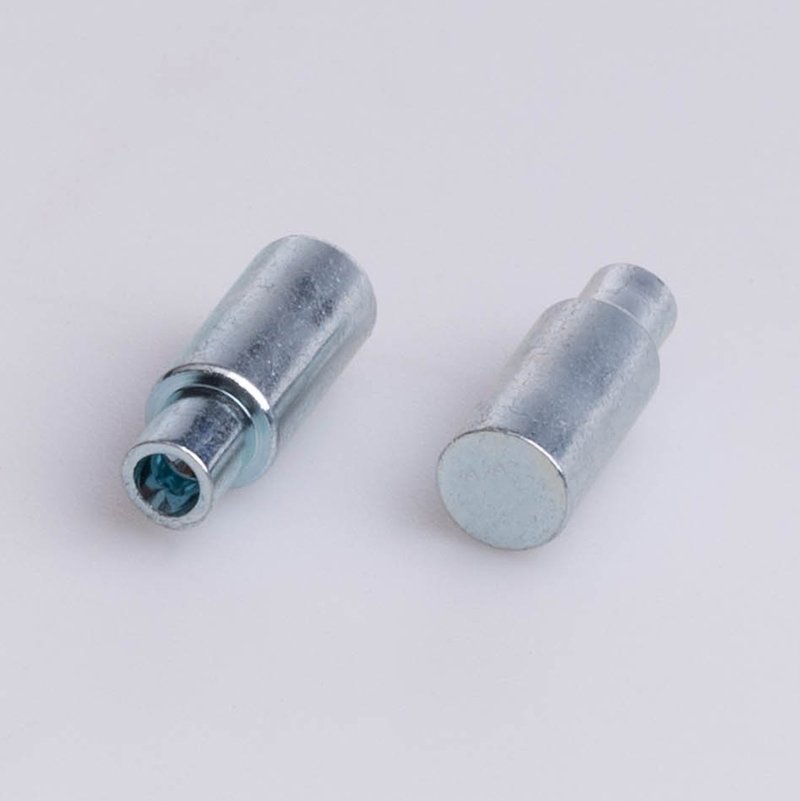
A semi-tubular rivet has a bore at the setting end. During setting, that hollow end is rolled outward against the mating part so only the thin wall deforms and the end finishes as a shallow flare rather than a spread head. Setting needs access to both sides of the joint: a punch on one face and an anvil or rollset on the other.

Advantages

  • Hollow end rolls instead of upsetting
The hollow end is rolled outward over the mating part, so only the thin wall has to deform rather than the full body.
  • Clean, low-profile formed end

The tubular end finishes as a neat annular flare rather than a spread head, so the joint stays flat on the formed side.

  • Head and body specified to the joint

Head style and diameter, body diameter, body length and wall thickness are set to the stack being joined and to the hole in the mating part.

  • Consistent setting across batches
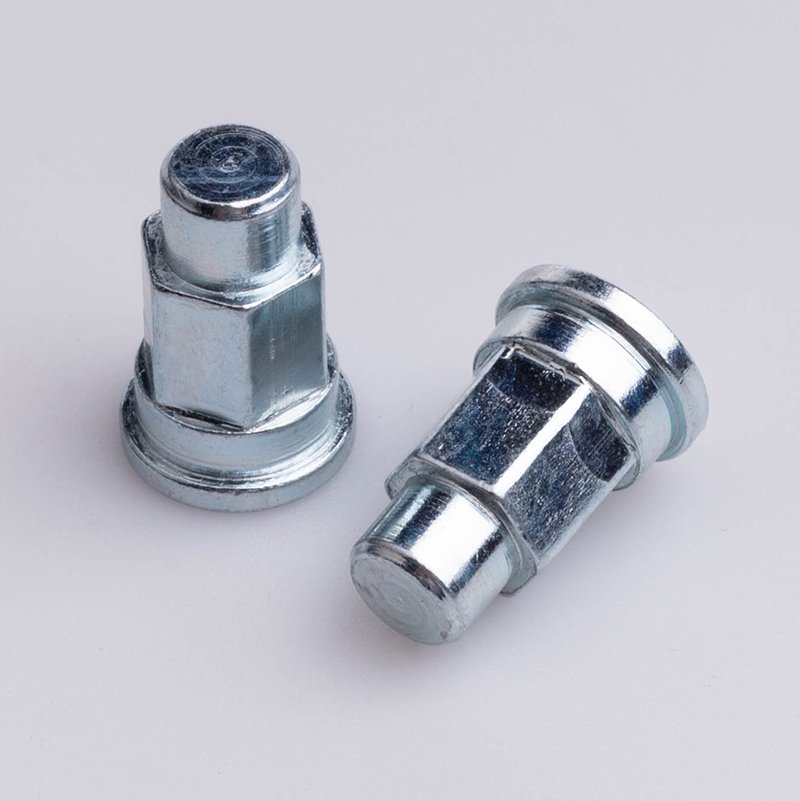
Material condition and bore depth are held steady so the flare forms the same way from batch to batch, which matters most on automatic setting equipment.

Industry Applications

Permanent Sheet and Bracket Joining

Used where two or more parts are joined for the life of the product. The rivet is formed in place and the joint carries no thread, so there is no thread to loosen.

Pivot and Hinge Points

Applied where the rivet both holds the assembly and acts as the axis a part turns on. Body diameter and how tightly the end is formed set how freely the joint moves, so both are specified rather than left to the setting process.

High-Volume Assembly

Suitable for lines where parts are fed and set automatically. Head shape, body length and material condition are controlled so forming behaviour stays the same across batches.