
No Drawing Yet: Five Numbers That Get You a Budget Price
Buyers often wait for a drawing before asking for a price, and the drawing takes weeks. For a budget number a photo and five measurements are enough, as long as everyone is clear about what that number is for.
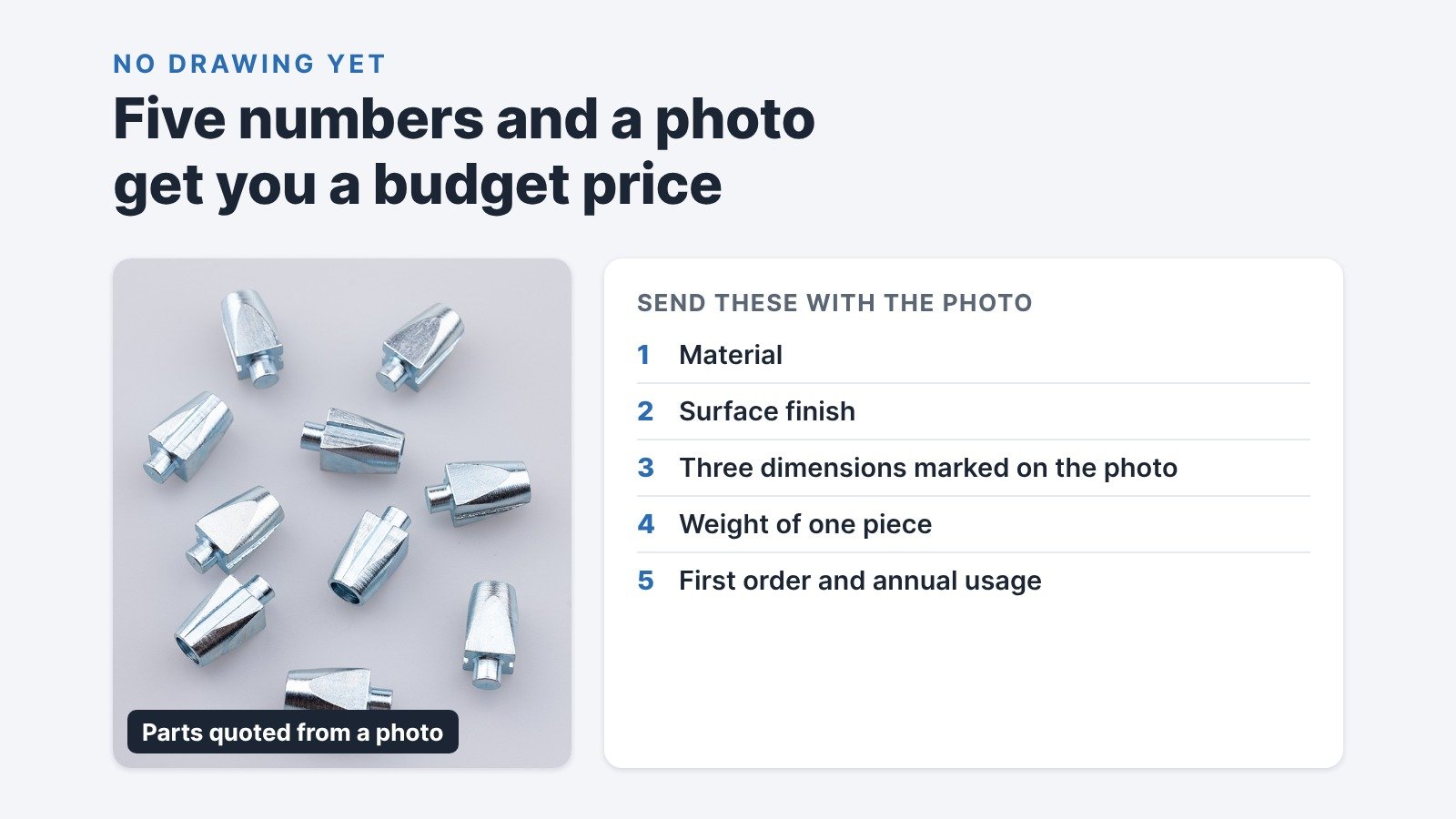
Short answer: For a non-standard part with no drawing, a supplier can give you a usable budget price from a photo plus five pieces of information: the material, the surface finish, three dimensions marked on the photo, the weight of one piece, and your first order and annual usage. That number is for budgeting and process selection. A firm price and a sample still need either a drawing or a physical sample, and both sides should say so out loud.
What a budget price is for
It answers three questions early: is this part in the range you expected, which process is it heading towards, and is it worth spending drawing time on at all. Those are the decisions that stall while a drawing is in the queue. What it does not do is fix a price. Anyone who treats a photo-based number as a commitment is going to be unhappy later, which is why we label it as a budget price in writing and say what would move it.
The five items
- Material. Steel, stainless, brass or zinc alloy, and the grade if you know it. If you do not, say what the part has to resist and we will name the candidates.
- Surface finish. Plated, passivated, plain, or black. Finish moves the price more than buyers expect, and it decides whether the part needs a bake or a post-treatment.
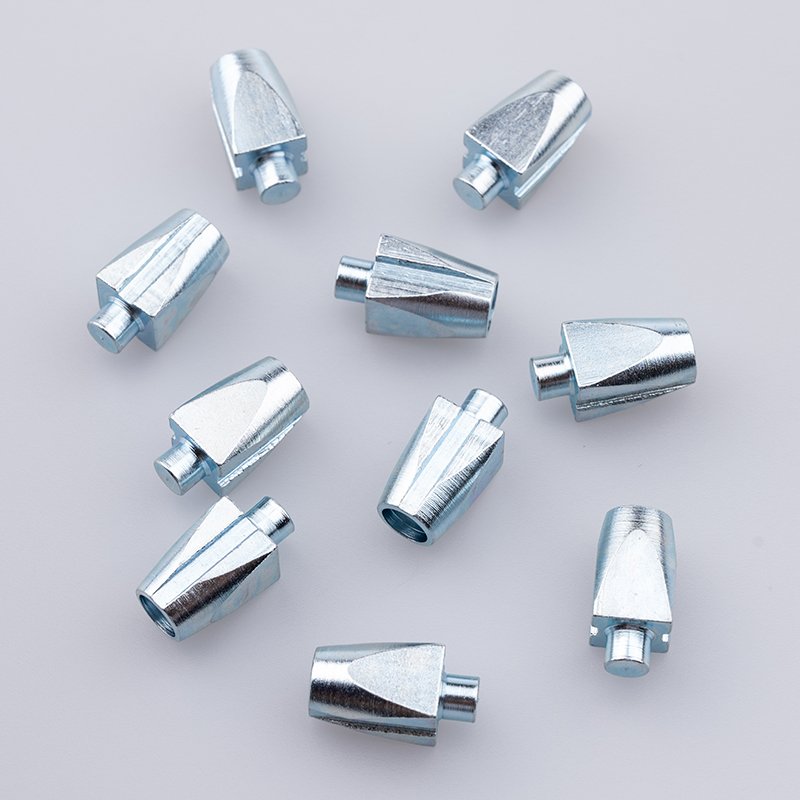
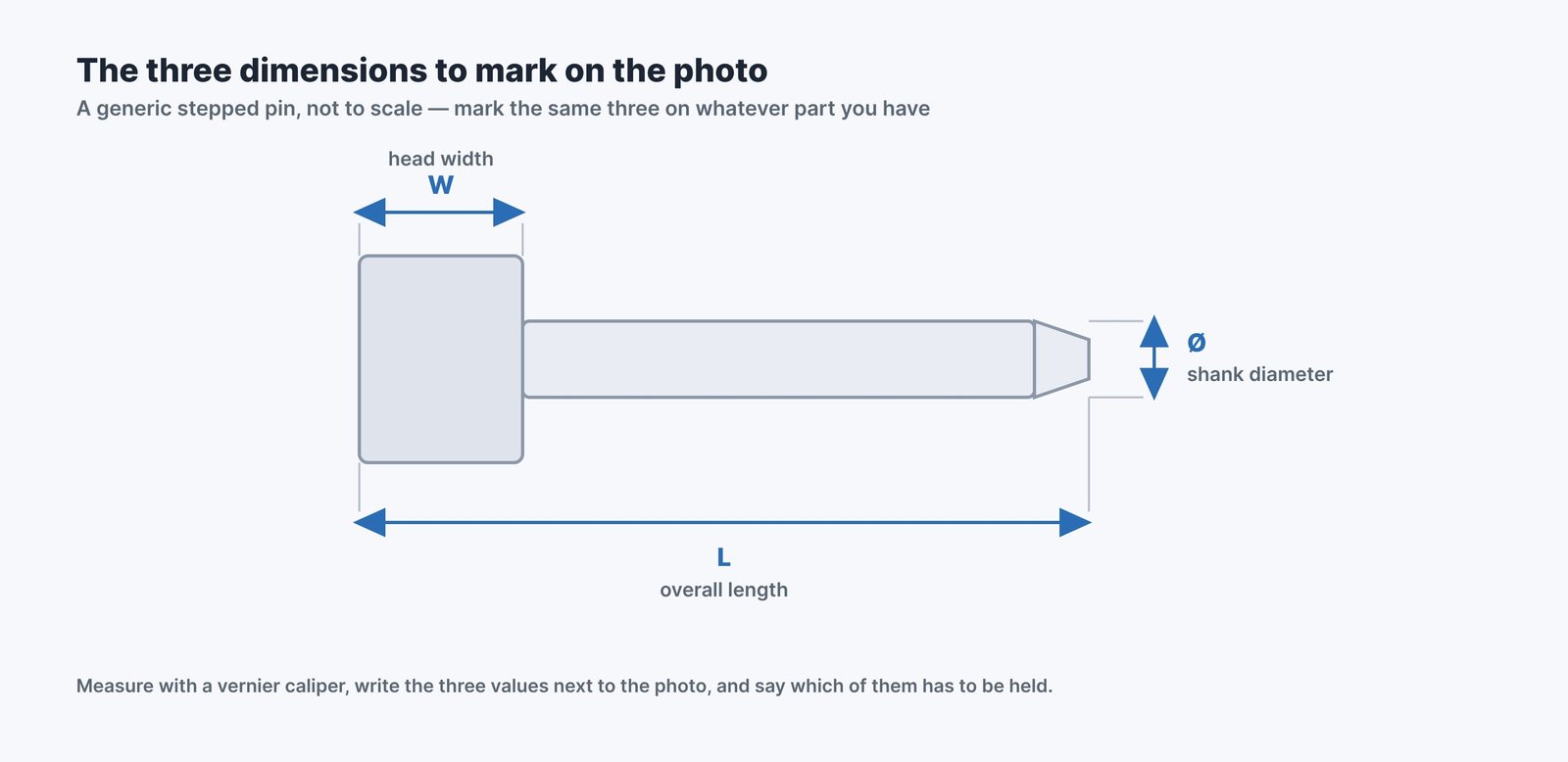
- Three dimensions marked on the photo. Head or body width, overall length, and shank diameter. Marked on the picture, not listed separately, so there is no doubt which is which.
- Weight of one piece. Weigh one piece on any scale you trust, or weigh a counted handful and divide — on small parts the second way is the more reliable of the two. Weight is the fastest cross-check on material volume, and it catches a mis-measured dimension immediately.
- First order and annual usage. Both, not one. The first order decides the setup share, the annual figure decides the process.
How to measure the three dimensions
A vernier caliper and a flat surface are the whole kit. Measure the widest point of the head across the flats or the diameter, the overall length from the top of the head to the end of the shank, and the shank diameter on the plain part of the shank rather than over a thread. Write the three values next to the photo and say which of them has to be held and which is free. That last sentence is worth more than a decimal place: a part with one critical diameter and two reference dimensions quotes very differently from a part where all three are controlled.
If the part is already in production somewhere and you have one in your hand, say so. A physical sample changes the conversation entirely, and it also brings its own trap: dimensions taken off a sample carry the previous supplier's tolerances, which is not the same as your requirement. We wrote about that in which tolerances to loosen on a drawing measured from a sample.
What a budget price cannot settle
- Tolerances. Without them the price assumes ordinary machining tolerances. If anything on the part is tight, it has to be named, and it may change the process.
- Thread class and gauging. A thread callout without its class or standard leaves the inspection method open, which is where disputes start.
- Tooling. Whether a mould or a die is needed, and who pays for it, often decides the real cost of a first order more than the piece price does.
- Packing and marking. Bulk, bagged, counted or weighed — cheap to agree at the start and expensive to add later.
When the drawing does arrive, the budget number becomes the baseline you check it against, which is more useful than it sounds: a firm price far away from the budget usually means a requirement appeared that nobody had mentioned, and that is worth finding before the order rather than after. For what a complete drawing should carry, see custom fasteners made to your drawing.
Send the photo and the five items by email to zoe@tfscrew.com, and say plainly that you want a budget price — it tells us to answer quickly and to flag the assumptions rather than to wait for the missing data.
Related: flat head or countersunk · what a sample inspection report should show
How this was written: the five-item list is from our own first-quote procedure for enquiries that arrive without a drawing, held in the evidence pool as an approved, public item. The diagram is drawn generically and not to scale. The parts shown are our own; no customer, industry or country is named.