



Stroller Wheel Axle Pins: Stopping Burrs, Bending, and Stiff Wheels Before Assembly

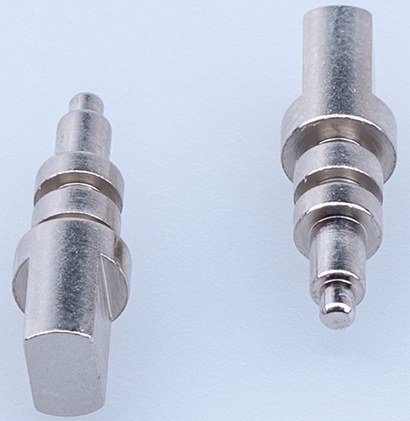
On a stroller, the wheels turn on a small axle pin. Parents shopping for a pram judge it on how safe and smooth it feels — and that feel comes down to a turned part most buyers never see. When a wheel binds, rattles, or works loose, the cause is usually not the wheel or the frame but the little pin running through the hub. Get the pin’s threads, grooves, and straightness right and the wheel rolls and folds cleanly; get them wrong and the problem shows up later as stiff wheels, assembly trouble, and returns.
Why stroller axle pins cause trouble in assembly
A customer making premium strollers came to us after fighting recurring problems with their previous axle pins:
- Under-filled threads. When the thread form is not fully formed, the pin does not run in cleanly and assembly is slow and inconsistent.
- Uneven grooves and burrs. Inconsistent slot/groove dimensions and leftover burrs left the assembled wheel stiff and not free-moving.
- Bending and deformation. Pins that came in bent or distorted pushed the supplier’s defect rate above 5% — a level that keeps showing up on the assembly line and in the field.
None of these is caught by a single diameter check; they are surface, form, and straightness problems that need the part inspected the way it actually has to work.
How we control the axle pin
At Guangdong Taiyuanfeng (TYF), inspection for a precision pin is built around how it runs in the hub, not just its nominal size:
- Thread form verified, not assumed. Thread fullness is checked with GO / NO-GO ring and plug gauges and the profile confirmed on an optical projector, so the under-filled-thread problem is caught before parts ship rather than on the customer’s line.
- Straightness and end faces checked on a concentricity tester. Runout, bending, and end-face flatness are measured on a concentricity tester covering Φ3–25 mm — the range stroller axle pins fall into — which is where the deformation problem gets caught.
- Optical sorting on every piece. A machine-vision sorter screens 100% of the pins for dimensional and surface defects, including burrs, resolving outside-diameter and length deviations to within 0.01 mm and holding the pass rate above 99.99% — rather than relying on sampled inspection.
- Precision turning. The pins are produced on a sliding-head (Swiss-type) lathe for diameters within 25 mm, which keeps the groove geometry and surface consistent piece to piece.
What it means for the finished stroller
With clean threads, consistent grooves, and straight pins, the wheels assemble smoothly and keep moving freely in use — fewer stiff-wheel complaints, fewer returns, and a product the brand is comfortable putting its name on. The pins in this program are used by a premium juvenile-products manufacturer.
Specifying an axle pin
To get an accurate quotation on a stroller or juvenile-vehicle axle pin, the details that matter most are: the outside-diameter tolerance, the groove or slot geometry, the thread specification, the pin length and any end-face or chamfer requirement, and — where the pin runs in a moving wheel — the mating hub or bore, so we can check the part the way it will actually be used. This is the same precision turned-pin capability behind our precision pins and offset components for hinges and fittings, where straightness and surface are controlled the same way.
Send your drawing for a quotation, or a sample if no drawing exists — we will reverse the spec.