


How It Works
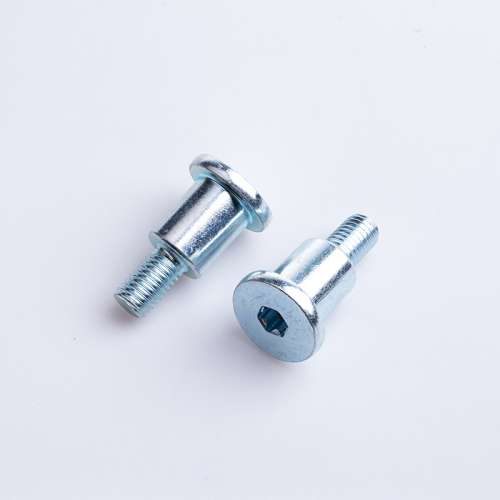
Shoulder screws include a precision unthreaded section between the head and the threaded end. This shoulder is the main functional area of the part. It can carry rotating components, maintain spacing, or provide a wear surface while the thread handles clamping and retention. This design is widely used when the assembly requires both secure fastening and controlled mechanical movement.
Advantages
-
Defined bearing surface
movement, and more consistent assembly behavior.
-
Fastening and function in one part
separate pins, bushings, or locating parts.
-
Controlled assembly relationship
travel, or part position must remain stable.
Industry Applications
Motion Control and Pivot Assemblies
Acts as a precise bearing surface in hinges, levers, arms, rollers, and other moving joints, helping control rotational play and maintain smooth, repeatable motion during continuous use.
Automotive/Equipment Components
Serves as a pivot, guide, or mounting point in mechanical subassemblies that require repeatable movement, better positional stability, and reduced wear at contact surfaces.
Custom Mechanical Assemblies
Supports rotating, sliding, or retained parts in custom equipment, fixtures, and mechanical structures where shoulder length, fit accuracy, and assembly consistency matter.
