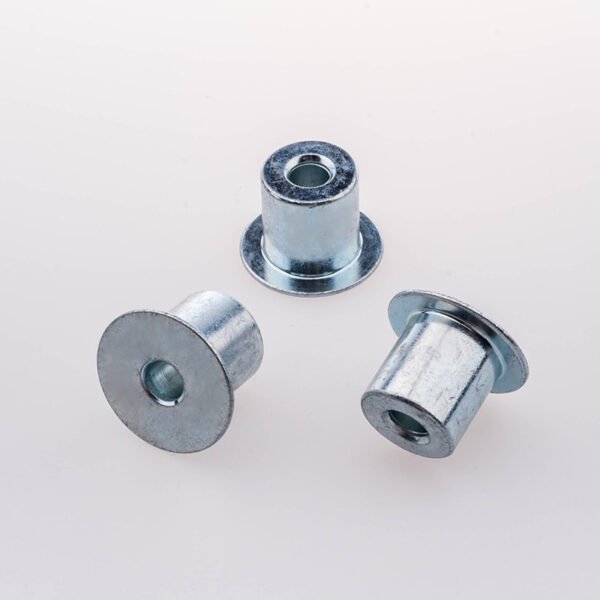

Tubular rivets (hollow rivets) are rivets with a through hole or blind hole in the center of the shank, resulting in a thin wall thickness. During installation, the shank is inserted through pre‑drilled holes and the tail is rolled or flared outward using a crimping press, clamping the workpieces together. Compared to solid rivets, tubular rivets require lower setting force, produce less impact on the workpieces, and are lighter in weight. Common types include semi‑tubular (blind hole, partial depth) and full‑tubular (through hole). They are particularly suitable for soft materials (e.g., leather, plastic, cardboard) or light‑duty applications with high surface quality requirements.
Customizable options:

Materials: Carbon steel (C1008/C1010), stainless steel (SS304/SS316), copper, brass, aluminum alloy, iron, etc.

Surface finishes: Electroplated zinc (blue/white, yellow, black), nickel plating, chrome plating, copper plating, black oxide, phosphating, painting, anodizing (aluminum), plain (natural finish), etc.

Head styles: Round, countersunk, flat, truss, large flange, pan head, bell head, etc.

Hollow type & dimensions: Semi‑tubular (specific hole depth, bottom thickness), full‑tubular (through hole); wall thickness customizable for strength; hole diameter, roll width, etc.

Other variables: Nominal diameter (1mm–12mm+), length (2mm–50mm), head diameter & thickness, roll angle or shape can be manufactured to customer drawings.
Widely used in leather goods (luggage, belts, shoes), children’s toys, plastic component assembly, electronic and appliance housings, automotive interiors, file binders, and ID tags.