

Industry Applications
Precision Parts for Medical Devices
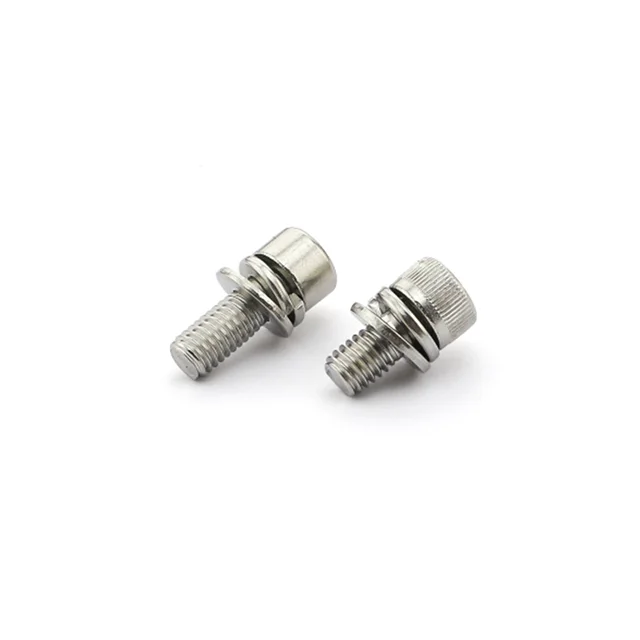
Precision parts for medical device applications, focused on controlled dimensions, surface condition, and stable production consistency for small assemblies.
The medical device industry is evolving toward more connected systems, more compact product architecture, greater use of digital technologies, and broader support for outpatient and home care settings. At the same time, manufacturers are working under tighter expectations for reliability, traceability, usability, and regulatory control across device development and production. WHO describes digital health as a growing part of more efficient and sustainable health systems, and the FDA continues to expand oversight and guidance around digital and AI enabled medical devices.
This shift is also changing how fasteners are designed and selected. In medical device applications, screws are no longer viewed as simple joining parts. They increasingly support structural precision, controlled assembly, material compatibility, service access, and appearance consistency across metal, plastic, and mixed material assemblies. As device structures become more compact and more functionally integrated, fastening solutions are becoming more application specific, with closer attention to tolerance control, surface condition, clean assembly, and repeatable performance in production.
Drive damage in controlled assembly
Inconsistent head or recess quality can cause slipping or marking during installation.
Cracking in plastic bosses
Improper screw matching can create stress concentration and reduce long term holding stability.
Panel gap and alignment issues
Small dimensional variation can affect flushness and enclosure fit in visible assemblies.
Wear in repeated servicing
Fasteners used in access panels must remain stable after multiple opening cycles.
Batch variation after sample approval
Changes in thread or surface condition can affect assembly consistency in production.
- Medical device housings and enclosures
Used in outer casings and internal structures where fastening consistency affects alignment, protection, and overall product integrity. - Precision assemblies and functional modules
Applied in internal components where positional accuracy and stable fastening support device performance and assembly reliability. - Equipment panels and service access areas
Used in panels, covers, and access points where screws need to support repeated installation while maintaining fit and surface condition. - Mixed material device structures
Suitable for assemblies combining metal, plastic, and coated parts where thread engagement and material compatibility must be controlled. - Portable and compact medical devices
Used in smaller devices where limited space increases requirements for head design, tolerance control, and assembly precision.
Tell us your application and fastener requirements.