


Double-End Stud Bolts: Why End-to-End Concentricity Decides Your Assembly Yield

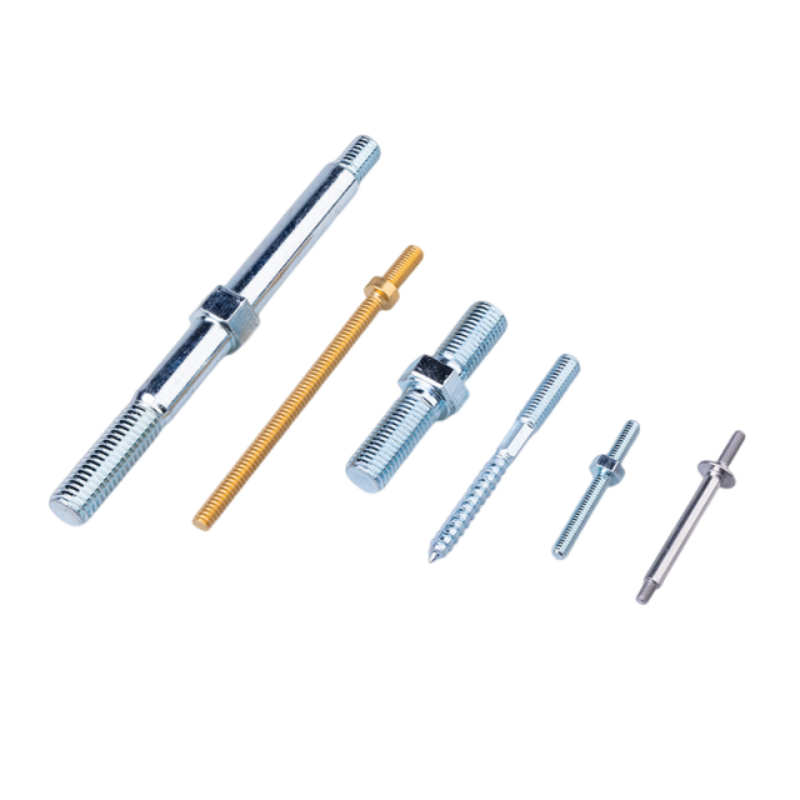
A double-end stud bolt looks simple: one shank, threads on both ends. But when it goes into an electric motor or a small appliance, one hidden dimension decides whether the assembly runs quietly or gets rejected on the line — the concentricity between the two threaded ends.
The failure mode nobody specifies on the drawing
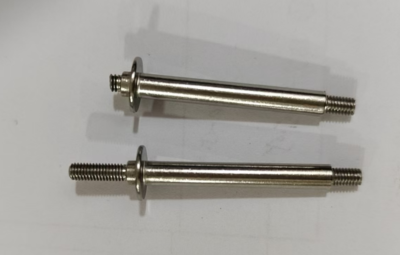
A common complaint we hear from buyers switching suppliers: the studs pass a basic thread check, yet on the assembly line they cause deformation, and some shanks even twist off during tightening. In one case a customer came to us with a stainless steel double-end stud where:
- The upper and lower threads were not concentric, so parts deformed during assembly and screw shanks sheared off under torque.
- The thread outside diameter was inconsistent — undersized studs seated loosely, oversized ones would not assemble at all — pushing the scrap rate above 5%.
None of this shows up if the incoming inspection only checks thread gauge fit on each end separately. The problem lives in the relationship between the two ends.
How a double end stud bolt factory controls concentricity
At Guangdong Taiyuanfeng (TYF), double-end studs are cold headed, and we treat end-to-end concentricity as a controlled characteristic rather than an incidental outcome:
- Dedicated concentricity testing. Every production run is checked on a concentricity tester (workpiece diameter range Φ3–25 mm). We also build custom gauges that simulate the customer’s actual assembly, so the part is verified against how it will really be installed.
- Concentricity held within 0.1 mm between the upper and lower threaded sections, which is what restores a clean, deformation-free fit.
- Go/no-go thread verification. Cold-headed threads are checked with go/no-go gauges, and an optical profile projector (range 0–300 mm) verifies thread form and dimensions against the drawing tolerance.
After we applied this process to the case above, the customer’s assembly yield rose to 98%, and the motor-noise complaints that triggered the supplier switch stopped. Branded appliance manufacturers use these stainless steel double-end studs today.
Why concentricity matters for motor noise
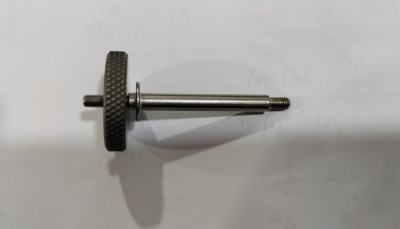
In a motor or any rotating assembly, a stud whose two ends are off-axis pre-loads the joint unevenly. The assembly is slightly distorted from the moment it is tightened, and that distortion shows up later as vibration and audible noise in the finished product. Specifying — and actually measuring — end-to-end concentricity is the cheapest point in the whole chain to remove that noise.
What to put on your RFQ
If you are sourcing double-end stud bolts from China, three lines on the RFQ will save you a qualification round:
- Concentricity requirement between the two threaded ends (we hold ≤0.1 mm).
- Thread verification method (go/no-go gauging on both ends, not just one).
- The real assembly context — torque, mating parts, finished-product noise requirements — so the factory can build an assembly-simulating gauge instead of inspecting in isolation.
We also supply double-end stud assemblies paired with spacer sleeves.
Send us your drawing or sample and we will quote with the inspection plan included.